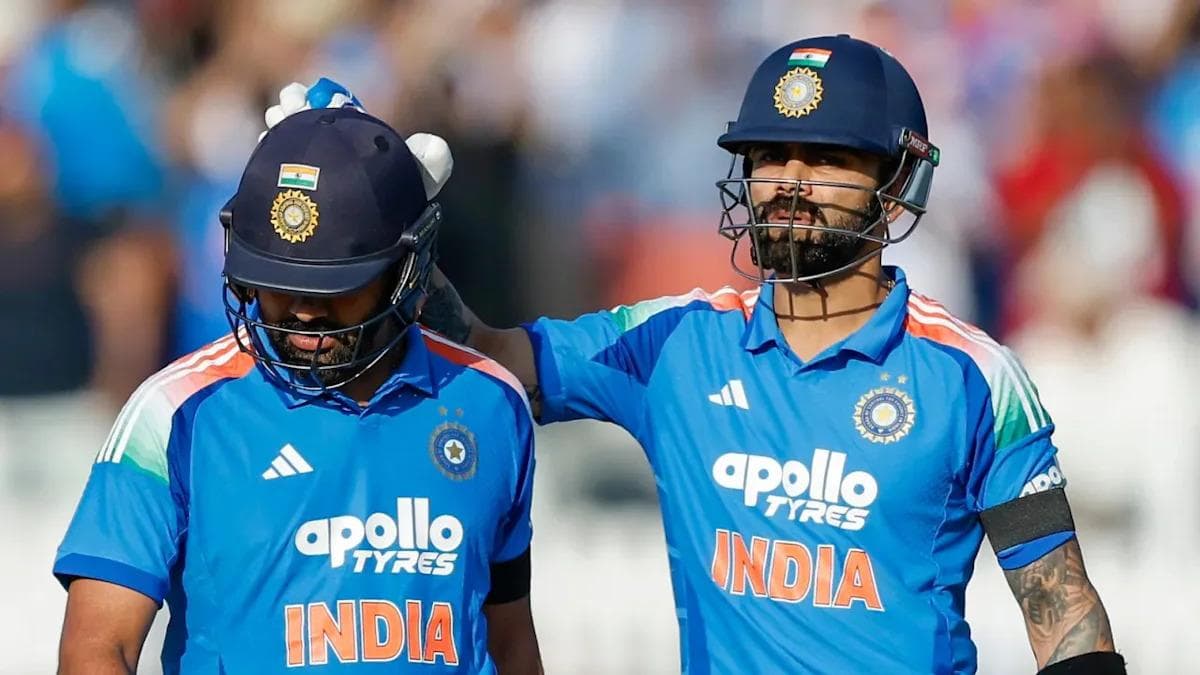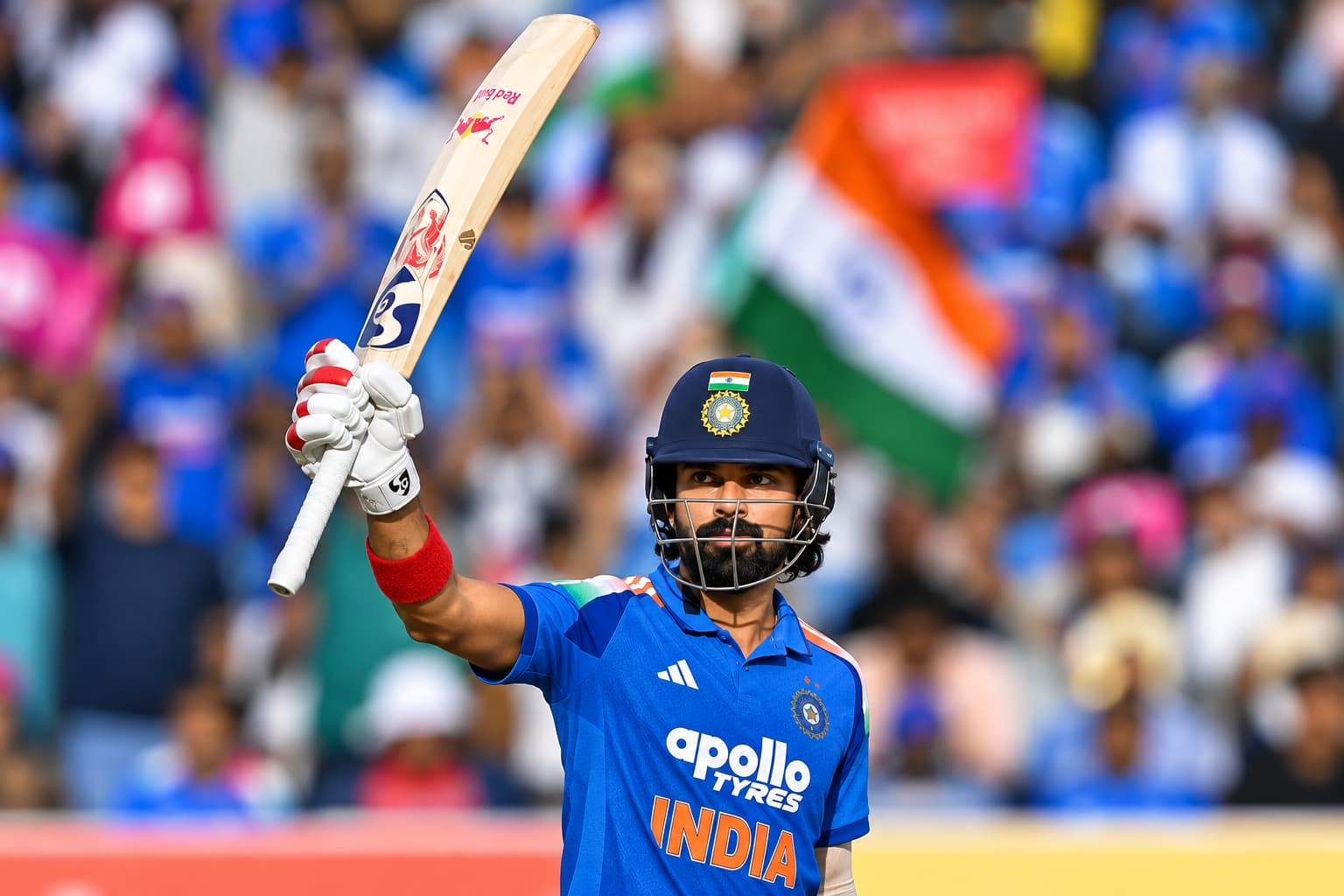

India and Afghanistan are ready to begin their three-match T20I series on September 13, 2026, with the opening game taking place at the Arun Jaitley Stadium in Delhi.
Although the matches are being played in India, Afghanistan is officially hosting the series. The remaining two T20Is are scheduled for September 15 and September 17 at the same venue.
For cricket fans, this first T20I brings an interesting contrast. India arrive with a powerful batting lineup, experienced fast bowlers and several exciting young players. Afghanistan, meanwhile, bring one of the most dangerous spin attacks in T20 cricket along with experienced names such as Rashid Khan, Mohammad Nabi and Rahmanullah Gurbaz.
This India vs Afghanistan match preview looks at the likely playing XIs, pitch conditions, team strengths, important player battles and the factors that could decide tomorrow’s game.
For users following the game through Cricbet99, this preview looks at recent team strengths, likely combinations, key player battles, pitch conditions and the factors that could influence the first T20I.
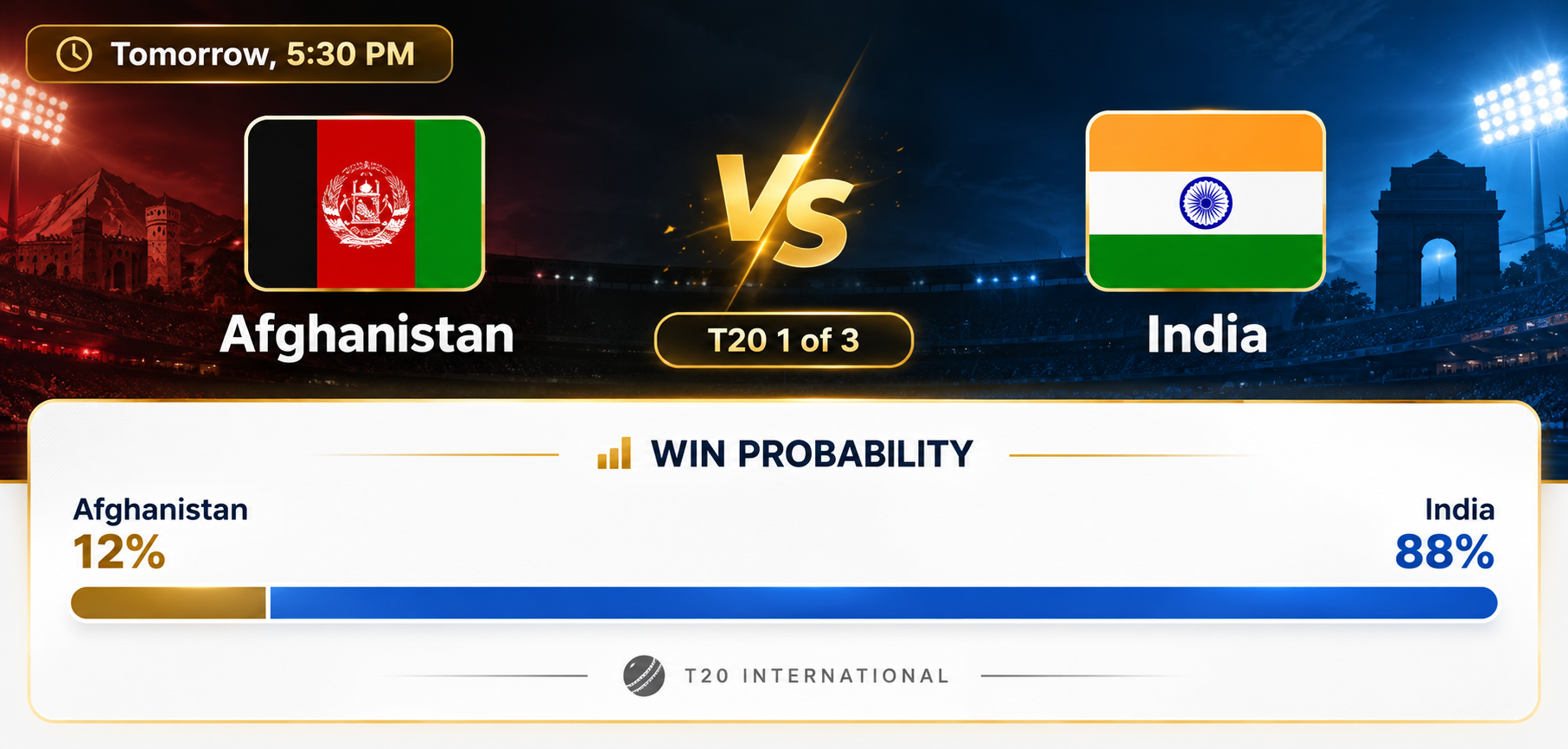
India vs Afghanistan 1st T20I: Match Details
| Match Detail | Information |
|---|---|
| Match | Afghanistan vs India, 1st T20I |
| Series | Afghanistan vs India T20I Series 2026 |
| Date | September 13, 2026 |
| Venue | Arun Jaitley Stadium, Delhi |
| Match Time | 7:00 PM IST |
| Format | T20 International |
| Series Matches | 3 |
| Remaining Matches | September 15 & 17 |
The Afghanistan Cricket Board has confirmed that all three matches will be played in Delhi from September 13–17.
India Squad for the Afghanistan T20I Series
India will be led by Shreyas Iyer, with Tilak Varma serving as vice-captain.
The updated Indian squad includes:
Shreyas Iyer (c), Abhishek Sharma, Vaibhav Sooryavanshi, Sanju Samson, Ishan Kishan, Tilak Varma, Shivam Dube, Nitish Kumar Reddy, Axar Patel, Washington Sundar, Varun Chakaravarthy, Ravi Bishnoi, Jasprit Bumrah, Arshdeep Singh and Yash Thakur.
One important late change is that Harshit Rana has been ruled out due to a rectus femoris strain, with Yash Thakur replacing him in the squad.
That still leaves India with considerable depth in both batting and bowling.
Afghanistan Squad for the India Series
Afghanistan will be captained by Ibrahim Zadran, who begins his first assignment as the team’s full-time T20I captain.
Their squad includes:
Ibrahim Zadran (c), Sediqullah Atal, Darwish Rasooli, Gulbadin Naib, Azmatullah Omarzai, Mohammad Nabi, Rashid Khan, Nangeyalia Kharoti, Rahmanullah Gurbaz, Noor ul Rehman, Noor Ahmad, Mujeeb Ur Rahman, Fazalhaq Farooqi, Naveen-ul-Haq and Abdullah Ahmadzai.
The return of Naveen-ul-Haq after injury gives Afghanistan another experienced bowling option alongside Rashid Khan, Noor Ahmad and Fazalhaq Farooqi.
India vs Afghanistan Probable Playing XI
The final playing XIs will only be confirmed at the toss, so any lineup before then should be treated as provisional.
India Probable XI
A possible Indian combination could be:
- Abhishek Sharma
- Vaibhav Sooryavanshi
- Ishan Kishan / Sanju Samson
- Shreyas Iyer (c)
- Tilak Varma
- Shivam Dube
- Axar Patel / Nitish Kumar Reddy
- Washington Sundar
- Varun Chakaravarthy
- Jasprit Bumrah
- Arshdeep Singh
Recent reports have suggested that India could use Abhishek Sharma and Vaibhav Sooryavanshi as an aggressive opening combination, although the final balance may change depending on conditions and team strategy.
Afghanistan Probable XI
Afghanistan could consider:
- Rahmanullah Gurbaz
- Ibrahim Zadran (c)
- Sediqullah Atal
- Darwish Rasooli
- Azmatullah Omarzai
- Mohammad Nabi
- Gulbadin Naib
- Rashid Khan
- Noor Ahmad
- Naveen-ul-Haq
- Fazalhaq Farooqi
Afghanistan’s biggest selection strength is their ability to combine spin depth with useful all-round options.
Arun Jaitley Stadium Pitch Report
The Arun Jaitley Stadium is traditionally associated with relatively short boundaries and surfaces that can bring both batters and spinners into the game.
Historical T20 international data at the venue shows:
- 20 T20 matches
- 6 wins for teams batting first
- 14 wins for teams bowling first
- Average first-innings score: 149
- Average second-innings score: 136
- Highest T20 total: 221/9
- Highest successful chase: 212/3
Those historical figures suggest that chasing teams have enjoyed considerable success at the venue, although conditions for one specific match can differ substantially from long-term averages.
The actual pitch used tomorrow will therefore be more important than simply relying on historical numbers.
Will the Toss Matter?
The toss could become important for two reasons.
First, historical T20 results at Arun Jaitley Stadium have generally favoured teams bowling first.
Second, evening conditions in Delhi can potentially change as the game progresses.
If dew develops, gripping the ball can become more difficult for spinners. That would be particularly relevant to Afghanistan because Rashid Khan, Noor Ahmad and Mujeeb Ur Rahman form such a significant part of their bowling strength.
However, the team winning the toss shouldn’t automatically be treated as the favourite. The actual pitch and weather conditions should be assessed closer to the start.
Weather Could Become an Important Factor
There is currently some concern about the Delhi weather for September 13, with forecasts mentioning the possibility of rain and thunderstorms around match day.
If rain affects the match, several things could change quickly:
- The number of overs may be reduced.
- Powerplay batting could become more important.
- Teams may choose more aggressive batting strategies.
- Revised targets could influence chasing tactics.
- The toss could become more significant.
Cricket fans should check the latest weather update shortly before the match rather than relying entirely on forecasts issued the previous day.
India Batting: Aggression at the Top
India’s batting lineup has several players capable of changing a T20 match quickly.
One player attracting particular attention is Vaibhav Sooryavanshi.
The 15-year-old was India’s leading run-scorer during the July 2026 T20I series against Zimbabwe, scoring 151 runs in three matches at an average of 50.33 and strike rate of 196.10.
If India pair him with Abhishek Sharma, the opening strategy could be extremely aggressive.
But Afghanistan’s new-ball attack presents a different challenge.
Fazalhaq Farooqi and Naveen-ul-Haq can test aggressive batters with changes of pace, angles and variations.
This makes India’s powerplay batting one of the most interesting phases of tomorrow’s match.
Afghanistan’s Biggest Weapon: Spin
Afghanistan’s strongest advantage is obvious: spin.
Rashid Khan, Noor Ahmad and Mujeeb Ur Rahman give Afghanistan multiple high-quality options through the middle overs.
That creates a fascinating tactical contest against India’s middle order.
Players such as Shreyas Iyer, Tilak Varma and Shivam Dube may need to decide when to attack and when simply to rotate the strike.
If Afghanistan can take wickets between overs 7 and 15, they could prevent India from setting up a strong finish.
But if India reach the final five overs with wickets in hand, the short Delhi boundaries could become difficult to defend.
Key Battle: India’s Batters vs Rashid Khan
Whenever Afghanistan play T20 cricket, Rashid Khan remains one of the most important players to analyse.
India’s approach to him could shape the middle overs.
Trying to attack every Rashid delivery carries obvious risk. On the other hand, allowing him to complete four economical overs without pressure can give Afghanistan control of the innings.
The smarter batting approach may involve rotating strike, avoiding clusters of dot balls and attacking only when the matchup or delivery provides an opportunity.
One wicket against a key Indian middle-order batter could quickly change the rhythm of the innings.
Key Battle: Jasprit Bumrah vs Rahmanullah Gurbaz
At the other end, Jasprit Bumrah against Rahmanullah Gurbaz could be one of the standout individual matchups.
Gurbaz often looks to attack early and can put bowlers under immediate pressure.
Bumrah provides the opposite challenge: accuracy, variations and experience both with the new ball and at the death.
If India remove Gurbaz cheaply, Afghanistan may be forced to play a more conservative powerplay.
If Gurbaz survives and starts finding boundaries, Afghanistan’s innings could develop very differently.
India’s Bowling Advantage
India’s bowling attack offers several different styles.
Jasprit Bumrah gives them world-class pace and control.
Arshdeep Singh provides a left-arm angle.
Varun Chakaravarthy can be difficult to read through the middle overs.
Ravi Bishnoi, Washington Sundar and Axar Patel provide additional spin options depending on the final combination.
This variety allows Shreyas Iyer to adjust according to the pitch and the Afghanistan batting order.
India’s main challenge will be deciding how much spin to use against a team whose batters regularly face high-quality spin bowling.
Afghanistan’s Path to Victory
Afghanistan shouldn’t be viewed simply as outsiders.
They have a clear route to competing with India.
First, they need their top order to avoid losing several wickets in the powerplay.
Second, their experienced all-rounders—including Mohammad Nabi and Azmatullah Omarzai—need to provide stability through the middle and final overs.
Finally, Afghanistan’s spinners need to control India’s middle order.
If Rashid Khan and Noor Ahmad can force India into a slow middle phase, the game could become much tighter than India’s batting depth suggests.
India’s Path to Victory
India’s strongest route appears to be using their batting depth to prevent Afghanistan’s spinners from controlling the tempo.
A strong powerplay would allow India to approach Rashid and Noor with less pressure.
With the ball, early wickets will be crucial.
If Bumrah and Arshdeep expose Afghanistan’s middle order early, India’s spinners can then attack rather than simply trying to contain runs.
Five Players to Watch
Vaibhav Sooryavanshi
The young batter’s aggressive style and recent form make him one of the most exciting players going into the series.
Jasprit Bumrah
India’s most experienced pace weapon can influence both the opening and death overs.
Rashid Khan
Afghanistan’s leading spin threat remains capable of changing a match within a single over.
Rahmanullah Gurbaz
An aggressive powerplay from Gurbaz could give Afghanistan the platform they need.
Mohammad Nabi
Nabi’s experience and all-round ability can become particularly valuable if the pitch offers assistance to spin.
Match Analysis: Which Team Has the Advantage?
On paper, India begin with the stronger overall squad.
They have greater batting depth, several high-quality bowling options and the advantage of playing in familiar Indian conditions.
Afghanistan’s strength lies in a more specific area: their spin attack can genuinely trouble India if the Delhi pitch is slow or provides grip.
That means the first six overs could become especially important.
If India score aggressively without losing many wickets, Afghanistan’s spinners may have to bowl defensively.
But if Afghanistan take two or three early wickets, Rashid Khan and Noor Ahmad could enter the game with immediate pressure on the Indian middle order.
For Afghanistan, the same principle applies. Their top order needs to survive India’s new-ball attack before trying to accelerate against the middle-over bowlers. Users looking to get started should first understand the Cricbet99 Register process, create secure account credentials and review the available cricket markets carefully.
India vs Afghanistan 1st T20I Prediction
India should be considered the stronger side before the match because of their batting depth and balanced bowling attack.
However, this is not necessarily a straightforward contest.
Afghanistan possess enough experience and spin quality to create problems, especially if the pitch is slower than expected.
Rather than predicting a guaranteed winner, the best pre-match assessment is:
India have the overall advantage, but Afghanistan become significantly more dangerous if their spinners get assistance from the surface and their top order provides a competitive start.
The toss, final playing XI, pitch report and weather should all be checked before making a final match assessment.
Quick Match Analysis Checklist
Before the first ball, check:
- Confirmed playing XI
- Toss result
- Final pitch report
- Rain forecast
- Whether dew is expected
- India’s opening combination
- Afghanistan’s spin combination
- Bumrah’s role with the new ball
- Rashid Khan’s matchup against India’s middle order
These details will provide a much clearer picture than simply looking at team rankings or reputation.
Final Thoughts India vs Afghanistan
The India vs Afghanistan 1st T20I 2026 has the ingredients for an interesting contest.
India bring explosive batting, experience and a deep bowling attack. Afghanistan counter with high-quality spin, dangerous top-order players and experienced all-rounders.
The Arun Jaitley Stadium adds another tactical layer. Historical T20 results at the venue have favoured chasing teams, while tomorrow’s weather could also influence both the toss and team strategies.
India may start with the stronger overall combination, but Afghanistan’s spin attack makes them a side that cannot be taken lightly.
The most reliable analysis will come after the playing XI, toss, pitch and final weather conditions are known.
FAQs on India vs Afghanistan
1. When is India vs Afghanistan 1st T20I 2026?
The first T20I is scheduled for Sunday, September 13, 2026.
2. Where will India vs Afghanistan be played?
The match will be played at Arun Jaitley Stadium in Delhi.
3. What time does India vs Afghanistan start?
Current official and major fixture listings show a 7:00 PM IST start.
4. Who is India’s captain?
Shreyas Iyer is captaining India for the series, with Tilak Varma as vice-captain.
5. Who is Afghanistan’s captain?
Ibrahim Zadran is captaining Afghanistan and begins his first series as their full-time T20I captain.
6. What is the average first-innings T20 score at Arun Jaitley Stadium?
Cricbuzz’s venue statistics currently list the historical T20 international first-innings average at 149.
7. Who has the advantage in India vs Afghanistan?
India appear stronger overall due to their batting and bowling depth, but Afghanistan’s spin attack can be highly influential if conditions favour slower bowling. No pre-match analysis can guarantee the final result.